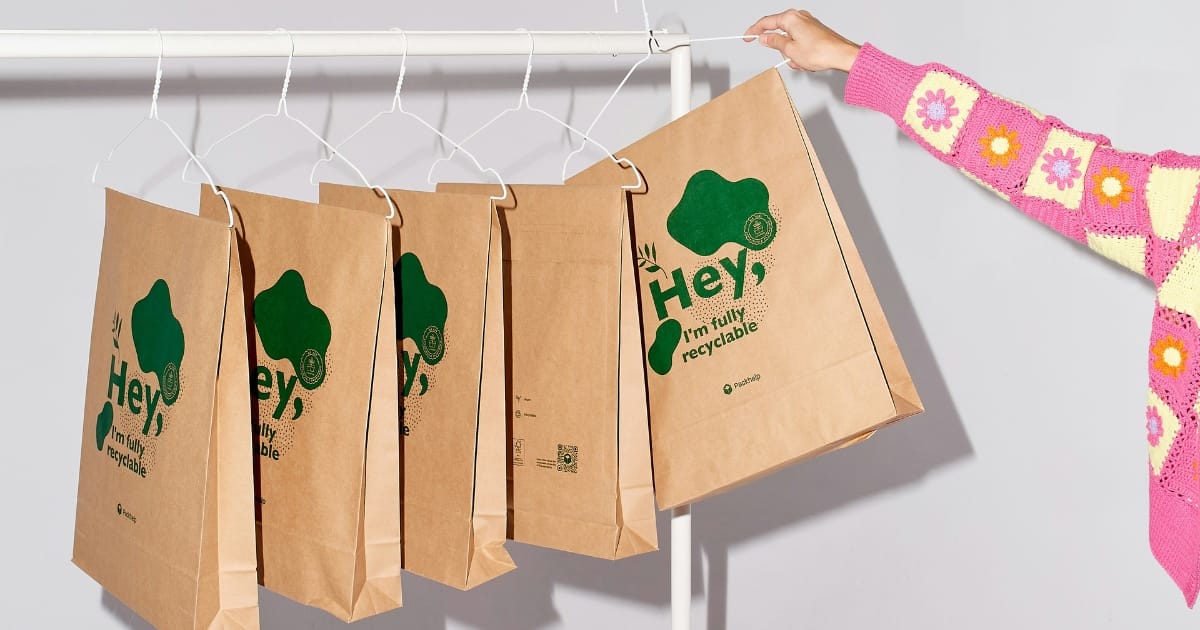
Shopping bags made of plastics is certainly a field of application with a huge potential for bioplastics.
Reusablebags.com estimates 500 billion to one trillion plastic bags are consumed worldwide every year. In the USA alone, n estimated 12 million barrels of oil are required to produce the 100 billion bags consumed annually. In Germany about 80,000 tonnes of plastic resin are converted into shopping bags each year. Up to now, just a small amount of these bags are made of plastics based on renewable resources and compostable plastics.
Different reasons, such as littering in some countries, the attempt to support the agricultural industry or simply to support sustainability in others, lead to different approaches in legislation.
Legislative attempts
In some of these countries taxes on shopping bags have been introduced. In March 2002, the Republic of Ireland, for example, became the first country to introduce a plastic bag tax, or PlasTax. Since 2003 a law in Taiwan requires restaurants, supermarkets and convenience stores to charge customers for plastic bags and utensils.
Other countries that have banned or have started a discussion to take measures discouraging the use of plastic bags include Australia, Bangladesh, Canada, Scotland, Italy, South Africa, Kenya, Mumbai (formerly Bombay), India and Tanzania.
In France, large supermarket chains like Auchan or Leclerc started to stop giving out plastic bags for free – a first step to reduce the number of plastic bags. 5 billion plastic bags were used in France in 2003, declining to 12 billion in 2004 and 9 billion in 2005.
Late last year, the lower house of the French Parliament passed an amendment to an agricultural provisions bill, which initially intended to ban all plastics packaging by 2010 unless made from biodegradable materials. The amendment was later modified in the French senate, so that now by 2010 all supermarket plastic checkout-bags have to be made of biodegradable material.
This legislative measure “has already created a noticeable impetus for market development”, says Stefano Facco, as representative of Club Bioplastique in france. He stated that the French agricultural and local industry will increasingly profit from this legislation. He gave encouragement to follow this example and develop further initiatives to support the market introduction of bioplastics at both European Union and member state level.
With all these activities in mind, one should not forget the initial idea behind the plastic shopping bag. A consumer shall be able to go out for shopping without any provisions made to carry his or her purchases home. Otherwise, the old shopping basket or tote would be the most economical solution.
Bioplastics on the advance
Shopping bags made of bioplastics are clearly on the advance.
BioBag International as. (formerly Polargruppen), headquartered in Askim, Norway, for example produces and sells several million shopping bags made of Mater-Bi material per year worldwide. In addition to two manufacturing facilities in Norway and Belgium (in close cooperation with Jemaco NV) BioBag is present in 18 countries. Jorn Johansen of BioBag is convinced that biodegradable bags (shopping bags as well as waste bags and other film products for agricultural and technical applications) is becoming an important part of their business.
The German company Holm Folienverarbeitung, is one of the suppliers with the biggest number of bioplastic shopping bags produced in Germany, as H.M. Holm, owner of the company says. This pioneer in this business has already been producing biodegradable plastic bags for 15 years, including some export activities to The Netherlands, Australia and the United Arab Emirates. Most of Holm’s bags are not the lightweight single use checkout bags as they are found in many countries. In Germany, the heavier reusable bags are much more common. “Even if these bags made of bioplastics are more expensive than fossil based plastic bags, many of our customers like the benefit of these bags being used as a conveyor for marketing messages” as H.M. Holm comments. A very successful bag is the so-called “Happy Bag” in close cooperation with natura packaging, that shows a photograph of fresh strawberries on one side and an empty field on the other, where e.g. small shops such as farm greengrocery stores can print their own logo. One big customer of biodegradable bags is the outdoor equipment supplier “Globetrotter”. Customers of its six stores in Germany carry home their purchases in biodegradable bags made by Holm. Ditmar Bosecke, Head of Marketing at Globetrotter says: “Our customers very much like to be outside, they love nature and act responsible to the environment. So the availability of bioplastic bags offered us a good opportunity to do something in this respect as well.” Globetrotter asked their customers in an internet poll about their opinion and as the result was overwhelming, Globetrotter decided to introduce shopping bags of biobased and biodegradable plastics right away. Globetrotter does not charge any money for these bags.
An Indian example
When Perses Bilimoria, founder and CEO of Earthsoul India, launched shopping bags made of Mater-Bi in India in 2001, hardly anybody wanted to believe that this could be a success in a developing country like India.
Today Earthsoul sells in excess of 300,000 shopping bags annually in India, certified according to EN 13432. Even if this number is small in comparison with the total number of plastic shopping bags being used in the country, “Earthsoul is creating an awareness and a special experience around the values of conservation, sustainability and dignity for the elements of nature for the customers who use an Earthsoul bag,” says Perses Bilimoria.
Most of the customers are organic food markets, high-end pastry and delicatessen shops, liquor stores, deluxe hotels and spas. Perses Bilimoria believes that although this certainly is still just a niche market, these are customers who are decision makers in the corporate world and the message is clearly understood in terms of good green governance and sustainable environmental practices.
With a growing population of almost 1.4 billion (more than China), by 2025 India will have a mature market for bioplastics based on renewable natural raw materials such as corn starch, which can be easily sourced from within the country.
In addition, Perses Bilimoria has been instrumental in convincing the Bureau of Indian Standards (BIS) to implement and follow the guidelines of EN 13432 and ASTM D 6400-99 for bioplastics in India, together with adequate compost labelling protocols. India shall shortly adopt the equivalent to the new ISO 17088 or EN 13432.
Perses Bilimoria is somewhat concerned however about the fact that India – like Europe – is facing the problems of oxo-degradable and additive based synthetic polymers, saying that they are “flooding the market in disguise as “biodegradable bags”. India is a very price sensitive market and most people are not educated on the aspects of biodegradability and compostability, thus it becomes very difficult to convince buyers about the difference between an EN 13432 certified product and those that are only degradable,” Perses says.
Shopping totes – the fashionable style
Shopping bags made from renewable resources can also be completely different. Chameleon Packaging, a Division of Design &Source Productions, Inc., New York, for example, offers tote bags made of the PLA fibre material Ingeo™. Chameleon Packaging began developing samples with NatureWorks Ingeo fabrics in 2004, but realised that most fabrics were developed only for the garment industry, making them typically too soft for application in bags. The backbone of Ingeo has been so supportive, that NatureWorks has offered opportunities to discuss development for new fabrics that would be more suitable for bags. The few projects specified with Ingeo typically obtain much, but the average customer has not wanted in the end to pay the difference in material costs. “But as the costs come down and such bags become more competitive and give the opportunity to use better materials, there will be more and more inquiries, and that will turn into more projects,” says Nicole Smith, environmental director of Chameleon Packaging. The customers need time to recognise that the material will still be around, be consistent, have enough production output to meet their needs, and be reliable in a few years time, as well as good for the environment. Chameleon Packaging’s commitment to sustainable materials is steadfast, and it is convinced that Ingeo has a large potential for its current and future customers. “Overall,” says Nicole, “I believe the non-woven material has the greatest potential. Non-woven bags have become really popular in all of the sustainably focused shops and stores”.
Conclusion
These are just a few examples of the successful introduction of bioplastic shopping bags. Shopping bags made of bioplastics can definitely not solve all the problems connected with plastic bags. Littering, for example, is more a question of education than of the material. The effect of bioplastic bags on the killing of marine life in the oceans, if there is any, is not yet been sufficiently researched. But their advantages surely offer a market potential in the months and years to come.
Reference: https://www.bioplasticsmagazine.com/ Issue 02/2006 (Sept)