Public pressure on companies to get rid of plastic packaging could result in more harmful consequences for the environment, a report has revealed.
New research for the Circular Economy Task Force, based on anonymised interviews from leading UK supermarkets and brands, reveals that companies are on the verge of swapping plastic for other materials with potentially greater environmental consequences, including higher carbon emissions.
The report by the Green Alliance – an environmental charity and think tank – claims that an absence of government direction in tackling plastic pollution is leading to a disjointed and potentially counterproductive approach to solving the problem.
Relatively little has changed in two years since the BBC’s Blue Planet II series cemented the issue of plastic pollution into the public’s consciousness, with the equivalent of 900 pieces of ‘single-use’ plastic still put on supermarket shelves for every person living in the UK every year.
The new report, entitled ‘Plastic promises: what the grocery sector is really doing about packaging’, quotes industry insiders, showing that big changes are on the way that could have negative consequences, including higher carbon emissions and lower packaging recyclability.
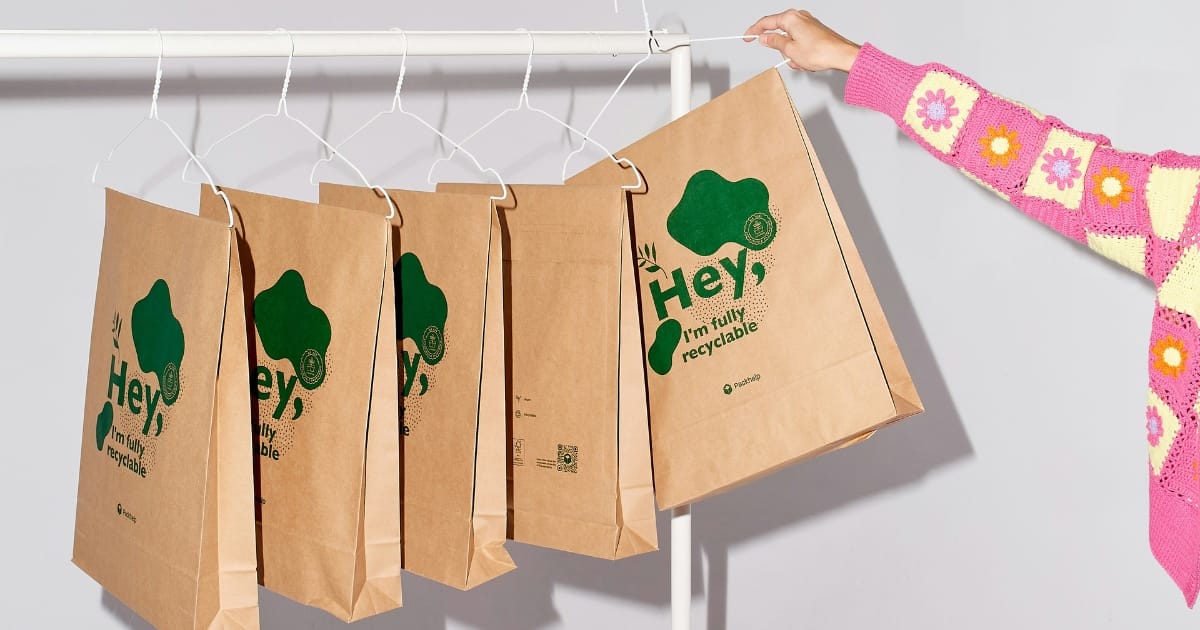
For example, single-use plastic is being replaced by other single-use packaging, or plastic bottles by glass bottles, with businesses admitting that alternatives are sometimes being chosen without fully evaluating their environmental impact.
“We are aware that [by switching from plastic to other materials] we may, in some cases, be increasing our carbon footprint,” said one interviewee, whilst another said: “There are people who would like us to take plastic out of the soft drinks section and replace it with something else like glass and Tetra paks, which aren’t recycled [in the area].”
The report highlights concerns over compostable or ‘biodegradable’ plastic, a lack of understanding of what the terms mean and how the materials should be dealt with once used.
Interviewees wanted a clearer approach on this issue and bemoaned a lack of “joined up thinking” across the sector, whilst others were concerned over misinformation about the eco-credentials of the alternatives to plastic packaging.
“The past year has just really pissed me off no end with companies coming out and boasting about not using plastic, even when they’re in single-use glass, and their carbon emissions are going to be off the scale,” said one respondent.
The report says that many companies want to see more “top-down intervention”, with the government being “braver” and playing a bigger role in directing developments and setting standards so that future action is coherent across the industry.
Libby Peake, senior policy adviser on resources at Green Alliance, said: “The public are right to be outraged about plastic pollution. But what we don’t want is, a few years down the line, for them to be outraged about new environmental problems caused by the alternatives. We need to address the root of the problem, our throwaway society.
“Companies need much more help from the government to tackle plastic pollution without making climate change and other environmental impacts worse in the process.”
Despite the shared aims and commitments of companies across the grocery sector, the report states that individual companies are developing their own policies around plastic to gain a competitive advantage, which could end up making environmental problems worse.
“If we aren’t careful, short term decisions could cause longer term problems for establishing a true circular economy,” said Adam Read, external affairs director at SUEZ recycling and recovery UK – a member of the Circular Task Economy Force.
“As the war on plastics continues to rage, avoiding unintended consequences should be at the forefront of everyone’s minds, and that includes government, industry and, of course, consumers. Change must be managed and planned if we’re to move towards fully closed-loop systems for recycling and, more importantly, reuse.
“That means we need to think much more carefully – and quickly – about how materials like compostable plastic are introduced. We must ensure a system where they are used where they make sense and in a way that people will understand to limit contamination and leakage.”