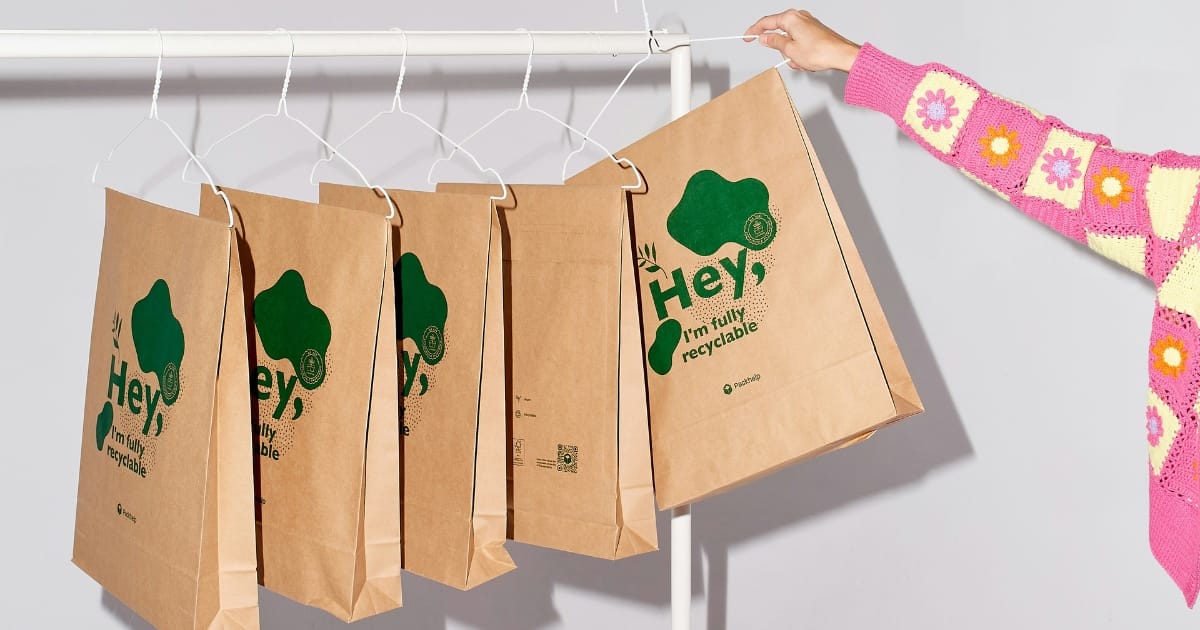
Compostable packaging is a very appealing concept to many consumers.
With more people than ever switched on to the challenges of waste management and ‘single use’ plastic pollution, plant-based packaging that breaks down and returns to the earth after use has never been more in demand.
But with so many different types of packaging on the market that claim to reduce environmental impact, consumers could be forgiven for not knowing which packaging products are genuinely eco-friendly and which aren’t as ‘green’ as they seem.
Now the UK’s consumer champion, Which?, has published a guide that should help clear up some of the confusion and point eco-conscious shoppers in the right direction.
Entitled ‘Five things to know about biodegradable and compostable plastics’, the helpful guide provides five key points on compostable plastics that are worth remembering. You can find the full guide on the Which? website, but here’s a brief summary.
Biodegradable does not always mean compostable
Everything biodegrades eventually, but this process can take a long time. Just because a product is biodegradable it doesn’t mean that it’s compostable – so the ‘c’ word is the key term to look out for.
Compostable products must adhere to the UK and EU standard EN13432. This means that 90% of the product must disintegrate in industrial composting conditions within 12 weeks, before biodegrading into carbon dioxide (CO2) within six months, leaving behind no plastic or toxic residue.
A seedling logo is commonly used on products that meet the compostable standard, whilst some retailers have taken steps of their own to help customers find compostable products.
Among them is leading UK manufacturer Polybags, who indexed their online catalogue with a series of standards, including one for its compostable packaging range, with products – all of which adhere to EN13432 – denoted on the site by a compostable leaf icon.
Compostable does not always mean home-compostable
Compostable standard EN13432 applies specifically to packaging sent to an industrial composting facility, such as via food waste collections. Not all packaging that meets this criteria will be suitable for home composting – as composting conditions will vary greatly – so there is no guarantee that an item will break down in home composting and, if it does, this could take a long time.
Compostable caddy liners – or similar very thin bags made – are the exception. These may be marked with the ‘OK Compost Home’ certification from TUV Austria, which means they have been tested in conditions similar to home composting. Some packaging manufacturers won’t have paid for this private testing but, in all likelihood, any caddy liner that meets industrial composting standard EN13432 is likely to also be suitable for home composting.
Do not put compostable plastic in your recycling bin
If you don’t have access to an industrial waste facility – i.e. a food waste collection bin – your only option for compostable packaging is to put it in your general waste.
Compostable plastics aren’t suitable for mixed recycling facilities as they can’t be sorted from regular plastics and can clog up machinery.
Use compostable caddy liners in your food waste bin
This one will seem fairly obvious to many people – food waste heading for industrial composting should be collected in a compostable waste bag.
However, some councils do allow food waste to be collected in plastic bags and may even provide them but, even after the bags are removed before composting, they can lead to plastic residues being found in the compost.
What’s more, some plants don’t distinguish between regular plastic bags and compostable plastic bags, so both are removed before composting, which seems to defeat the object of using a compostable bag in the first place.
It is better to reuse than recycle
Whilst compostable plastics do have an important part to play in the future of waste management, the fact they are not recyclable means that they are effectively single-use, which its own impact on carbon emissions.
“It’s far better to buy things with no packaging at all,” said Beverley Simonson, senior advisor at ReLondon – an organisation aiming to transform London into a leading low-carbon circular economy.
“Buying fruit and vegetables loose, or signing up to a veg box, are great plastic-free options; and re-using and refilling your own boxes, bottles or bags are the next best options for replacing plastic packaging.”
Which? is widely recognised as the UK’s consumer champion. The organisation describes itself as “not for profit and all for protecting consumers – a powerful force for good, here to make life simpler, fairer and safer for everyone.”