
Middle East tensions trigger record rise in food packaging costs
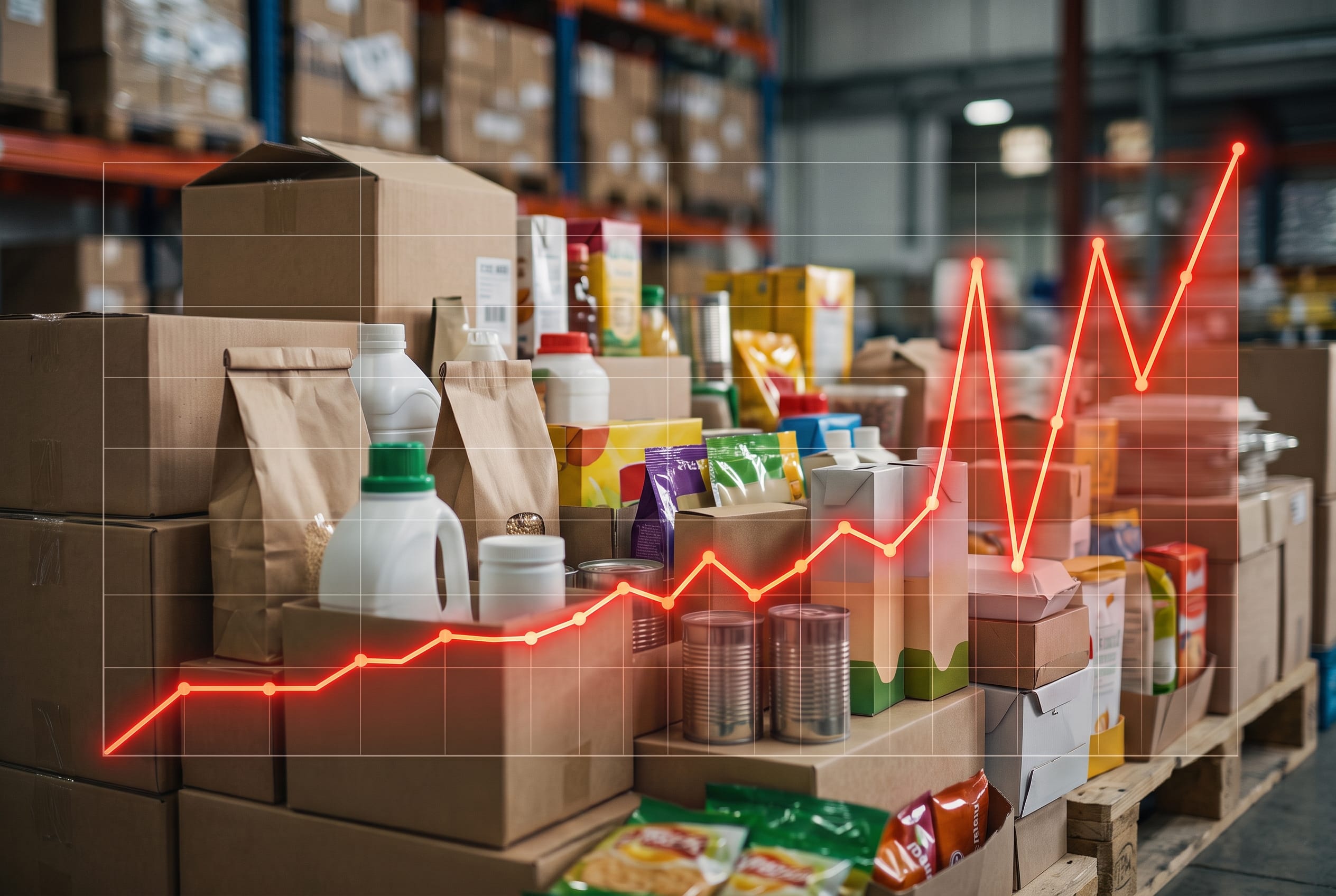
Global unrest and severe supply chain issues have triggered an unprecedented surge in food packaging costs across Europe, sparking fears of a renewed spike in supermarket grocery inflation. Figures from the Flexible Packaging Europe (FPE) Raw Material Price Index show that the second quarter of 2026 brought rapid price rises across every major packaging material. The crisis, largely driven by shipping disruptions around the Strait of Hormuz, has heavily hit an industry reliant on plastics, foils and paper to keep everyday food products fresh. The supply chain shock This sudden market shift resulted from a clash of low European material stocks and disrupted Middle Eastern production. As global threats emerged, buyers abandoned cost negotiations in a panic to secure vital supplies. This rush buying caused raw manufacturing materials to skyrocket within weeks: BOPP plastic film surged by 97% owing to severe European resin shortages. PET plastic film rose by 40%, driven by rising global oil prices. HDPE and LDPE packaging jumped 38% and 31% respectively, as buyers prioritised supply over cost. Even materials less reliant on oil, such as aluminium foil, felt the squeeze due to soaring warehouse storage premiums and sustained high energy costs, with prices increasing by 12%. Impact on supermarket aisles While European suppliers have managed to maintain delivery volumes without major factory closures, the severe financial impact is now rippling down the supply chain. Food and drink manufacturers cannot absorb these double-digit increases indefinitely. Consequently, industry bodies like the Food and Drink Federation (FDF) have revised their late-2026 UK food inflation forecasts to 9% or higher. The primary concern for brands is “shelf shock”, the risk that impending retail price hikes will severely hurt consumer spending. For food producers aiming to navigate this market volatility, securing reliable, cost-effective packaging has become more critical than ever to protect their tightening profit margins. Is the peak behind us? There are early signs that the worst of these sudden price spikes may have plateaued. Late June data indicates that as buyers shift their focus back to affordability, more competitive offers from international markets are helping spot prices ease. If supply chain bottlenecks continue to clear alongside the gradual reopening of the Strait of Hormuz, packaging prices should normalise towards the end of 2026. However, because baseline costs remain well above pre-crisis levels, the food industry must prepare for elevated overheads to persist well into the autumn.
Brands face ‘compliance crunch’ as sustainable packaging claims go scientific
The era of vague environmental promises is coming to an end, as the packaging industry prepares for a major shift toward ‘substantiated sustainability’ by 2026. According to a new industry report from Innova Market Insights, the focus for manufacturers has moved from marketing-led ‘green’ initiatives to data-backed compliance. Driven by stricter regulations such as the EU’s Packaging and Packaging Waste Regulation (PPWR), brands are now being forced to provide scientific proof for every eco-friendly claim they make. Scientific proof over slogans The report identifies ‘Substantiated Sustainability’ as the top trend for 2026. While consumers have long expressed a willingness to pay more for greener options, scepticism remains high over ‘greenwashing’ – the marketing practice of making a company, product or policy appear more environmentally-friendly or sustainable than it actually is. “Sustainability has moved from a marketing advantage to a compliance obligation,” says Alisa Selezneva, senior analyst at Innova. “Brands must ensure every recyclability or carbon claim is legally defensible.” To meet these demands, companies are increasingly turning to third-party verification and life-cycle assessments. Leading examples include Carlsberg’s ‘Green Fibre Bottle’, which uses certified bio-based materials backed by transparent data to prove its environmental credentials. The digital watchdog Digital innovation is playing a central role in this transition, and an increasing role for digital technologies was highlighted in the report as the second most-significant packaging trend. The rise of ‘Digital-Enhanced Designs’ – including AI-powered QR codes and blockchain technology – allows consumers to track a product’s lifecycle in real-time. These ‘digital product passports’ are expected to become standard, providing detailed data on a package’s origin, recyclability and carbon footprint. For the consumer, a simple scan of a QR code can now verify whether a product truly lives up to its eco-labels. Practical solutions for businesses As the regulatory net tightens, UK businesses are seeking reliable sources of verified materials to avoid potential penalties. Many are turning to established specialists such as Polybags, who provide an extensive range of eco-packaging solutions along with clear guidelines on their eco-credentials, including a helpful index of packaging features and standards that apply to each of the products in their catalogue. For brands looking to combine these sustainable materials with the latest digital or personalised printing trends – another key 2026 forecast – dedicated services like PB Print are helping to bridge the gap between regulatory compliance and consumer engagement. The message for 2026 is clear: packaging is no longer just a container, but a scientifically validated communication tool. Companies that fail to adapt to this data-driven reality risk not only falling foul of the law but losing the trust of an increasingly savvy public. Image courtesy of @packhelp on Unsplash.
UK Packaging PRO appointed to lead landmark recycling reforms
A new industry-led body has been appointed to oversee a major overhaul of UK packaging waste rules. UK Packaging PRO will act as the Producer Responsibility Organisation (PRO) for the government’s new Extended Producer Responsibility (pEPR) scheme – regarded as one of the most significant environmental programmes in a generation. The pEPR scheme is designed to help drive the shift to more recyclable materials whilst reducing landfill waste, and will shift the financial burden of managing this away from taxpayers and towards the businesses that produce the packaging. Following a competitive selection process, PackUK announced the appointment of the new body, which represents more than 100 of Britain’s largest brands, retailers, and trade bodies, and is supported by major industry players including the Food and Drink Federation (FDF). How will it work? Under the pEPR scheme, firms will be charged fees based on the amount and type of packaging they place on the market. These funds – estimated at £1.4 billion in the first year alone – will be used to pay local authorities for the collection and management of packaging waste. By making it more expensive to use difficult-to-recycle materials, the government aims to incentivise businesses to choose sustainable alternatives and reduce their overall material footprint. “This government will accelerate the circular economy transition,” said Circular Economy Minister Mary Creagh. “The launch of UK Packaging PRO is a major step forward, putting industry expertise at the centre of how pEPR is delivered.” A seat at the table While PackUK will retain final authority over producer fees and payments to councils, UK Packaging PRO will provide the technical expertise and industry insight needed to run the day-to-day operations. “We’re very proud to have been appointed to play such a vital role in the Packaging EPR scheme,” said Karen Graley, Head of UK Packaging PRO. “UK Packaging PRO was created to give producers a genuine seat at the table. With strong governance in place, a clear mobilisation plan, and broad support from across the sector, we are ready to get to work – in close partnership with PackUK, governments, local authorities and organisations across the value chain to deliver a packaging system that works better for everyone.” The formal appointment began on 1 April 2026, with responsibilities being introduced gradually to ensure a smooth transition for businesses and local authorities alike.
European carton packaging sector cuts carbon emissions by 8% in three years

The European carton packaging industry saw its carbon footprint shrink by 8% in three years up to 2024, according to a new industry report. Data released by Pro Carton, the association representing cartonboard manufacturers, shows that annual emissions dropped from 929kg of carbon dioxide (CO2) equivalent per tonne in 2021 to 854kg in 2024. Industry leaders say the figures provide ‘verifiable data’ for companies looking to switch from plastic to lower-carbon alternatives. Fossil fuel shift The reduction has been largely attributed to a significant move away from fossil fuels in the manufacturing process. Between 2021 and 2024, European mills reduced their reliance on fossil energy from 46% to 39%, whilst the use of wood-based biofuels and renewable heat sources increased over the same period, helping manufacturers avoid around 60kg of CO2 emissions per tonne. The report also highlighted a dramatic shift in electricity sourcing. The proportion of low-carbon electricity purchased by surveyed mills rose from 23% in 2021 to 66% in 2024. Lower-carbon alternative The study, titled the 2025 Carbon Footprint of Carton Packaging Study, was conducted by the Research Institutes of Sweden (RISE) and independently verified by the Institut für Energie-und Umweltforschung (ifeu) in Germany. It was based on data from facilities responsible for 60% of European cartonboard and 16% of folding carton production. Pro Carton stated that the findings reinforce the environmental credentials of fibre-based packaging, which is sourced from sustainably managed European forests. These forests act as a natural ‘carbon sink’, absorbing CO2 from the atmosphere. Meeting climate targets As businesses continue to seek ways to meet stringent Scope 3 climate targets – which require companies to account for emissions throughout their entire supply chain – the demand for sustainable alternatives remains high. For companies looking to source eco-friendly solutions, specialist suppliers like polybags.co.uk offer a variety of paper and cardboard packaging options that align with these greener procurement strategies. Pro Carton’s report also found that the converting process – where board is turned into boxes – represents about one-fifth of total emissions, whilst direct on-site emissions from printing and drying account for just 2%.
Milk-based biodegradable plastic offers potential solution to single-use waste

Scientists in Australia have created a new biodegradable packaging material using milk protein that fully decomposes in soil within just 13 weeks. Researchers at Flinders University in South Australia – working with colleagues from Colombia’s Universidad de Bogotá Jorge Tadeo Lozano – made the potential breakthrough in combating plastic pollution, by developing a thin, durable film that imitates the characteristics of traditional single-use plastics, whilst being far more environmentally-friendly. According to the research, published in the journal Polymers, the material combines calcium caseinate – the primary protein found in milk – with modified starch and bentonite nanoclay, with glycerol and polyvinyl alcohol added to improve durability and flexibility. Testing found that the material steadily decomposed under normal soil conditions, with a full breakdown estimated to occur within 13 weeks. With the packaging industry under increasing pressure to produce more sustainable food packaging, this development provides a welcome breakthrough and early evidence that combining biopolymers with nanoclay suspensions can produce films suitable for this purpose. “The entire formulation was designed to use inexpensive ingredients that are biodegradable and environmentally friendly to create a sustainable alternative with enhanced characteristics,” said Nikolay Estiven Gomez Mesa, one of the project’s lead researchers. The environmental impact of plastic remains a critical concern for global regulators. Statistics from the journal Nature suggest that approximately 60% of current plastics are used for single-use applications, with only 10% being recycled. Global plastic production has climbed from 2 million tonnes in 1950 to 475 million tonnes by 2022, and the Organisation for Economic Co-operation and Development (OECD) has warned that this could increase to 700 million tonnes by 2040, without coordinated international action. “Everyone can play a part in reducing their plastic use, and finding biodegradable polymer alternatives is an important part of science helping to find solutions for industry, consumers, and the environment,” said Professor Alis Yovana Pataquiva-Mateus, who co-led the study. “Most of our single-use plastic comes from food packaging, so these sorts of options should be explored further and join the circular economy revolution to conserve resources.” Image courtesy of Flinders University.
Global secondary packaging market set to hit £224 billion by 2030

Research from Smithers forecasts that the global market for secondary and protective packaging will hit £224 billion by 2030. The secondary packaging market is undergoing a significant transformation, driven by the ascendancy of e-commerce. A recent report from Smithers – a multinational testing, consulting and information services provider – indicates that e-commerce has surpassed consumer durables, non-durables, and industrial allocations to become the world’s fastest-growing segment in this market. While a steady increase in overall secondary packaging volumes is anticipated throughout the remainder of the decade, the composition of materials, formats, and consumption locations is fundamentally shifting. Packaging demand is now being heavily influenced by warehouses, fulfilment centres, and parcel networks, eclipsing the impact of traditional retail channels. Furthermore, the global packaging industry is increasingly prioritising environmental sustainability. Josh Brooks, divisional director of packaging at Easyfairs, said: “The global packaging industry is placing increasing emphasis on improving the environmental sustainability of its products as consumer expectations and regulatory requirements continue to intensify. “Companies are working to reduce material use, adopt recyclable or renewable resources, and lessen overall environmental impact.” The European market is poised for a significant increase in e-commerce secondary packaging volumes, which Smithers projects will rise by 45% by 2030. This growth sharply contrasts with the more modest 10.5% growth anticipated for the overall secondary packaging market. Specifically, e-commerce packaging is expected to grow from 4.7 million tonnes in 2023 to 6.8 million tonnes by 2030. Over the same period, total secondary packaging volumes are forecast to increase from 30.6 million tonnes to 33.8 million tonnes. Brooks added: “In Europe, EU member states are preparing to implement the PPWR over the next five years, aiming to meet the 2030 target for fully recyclable packaging. “This regulatory push underscores the growing urgency for innovation that aligns environmental responsibility with reliable packaging performance.” Paper-based protective packaging is projected to be one of the fastest-growing material types for packaging. The report forecasts a Compound Annual Growth Rate (CAGR) of 3.9% for paper fill through to 2030, driven by the adoption of automated paper dispensing systems in large e-commerce fulfillment centers. In the UK, the shift to paper is influenced by environmental, operational, and regulatory factors. Many longstanding packaging manufacturers, such as Polybags.co.uk have diversified their product range in recent years to include an ever-expanding selection of paper and cardboard packaging. Key drivers include the Plastic Packaging Tax, reduced Extended Producer Responsibility (EPR) obligations, and the material’s strong acceptance in kerbside recycling schemes, as highlighted by Smithers. Smithers also noted an emerging opportunity in returnable and reusable secondary packaging, particularly within closed-loop or business-to-business supply chains. However, this shift faces near-term obstacles, such as higher initial costs, low return rates, demanding durability requirements, and the logistical complexity of reverse logistics, cleaning, and redistribution.
UK grocery retailers’ packaging pledges fall short of in-store reality

Significant discrepancies exist between the public sustainability pledges of UK grocery retailers and the actual packaging used in their stores, according to new research from packaging consultancy Aura. This finding underscores the urgent need for action as regulatory pressures, specifically the intensifying EPR and RAM regulations, increase for the sector. Aura, a premier global packaging consultancy, has conducted proprietary research that reveals surprising insights into the packaging sustainability performance of major UK grocery retailers. This research, which compared in-store findings against retailers’ public sustainability pledges, confirms that packaging sustainability is a key strategic priority, not just a talking point. The research arrives amid a demanding packaging landscape, shaped by evolving consumer expectations, escalating environmental pressures, and new regulations like Extended Producer Responsibility (EPR) and the Recyclability Assessment Methodology (RAM). The findings highlight significant gaps, alarming inconsistencies, and exemplary best practices, clearly identifying where the sector excels and where it falls short. To influence and inform the sector, these findings are detailed in the new e-book, UK Grocery Retail Packaging: The time to act is now. The e-book provides a clear comparative view of how UK grocery retailers measure up against each other and their own commitments, while underscoring the urgent need for action. By leveraging these insights, you can: Integrate packaging sustainability from the initial design phase Align packaging with legislation to lower total cost of goods and mitigate fees Enhance packaging design using practical examples and retail case studies Achieve packaging goals while successfully balancing environmental, consumer, and commercial needs