
Middle East tensions trigger record rise in food packaging costs
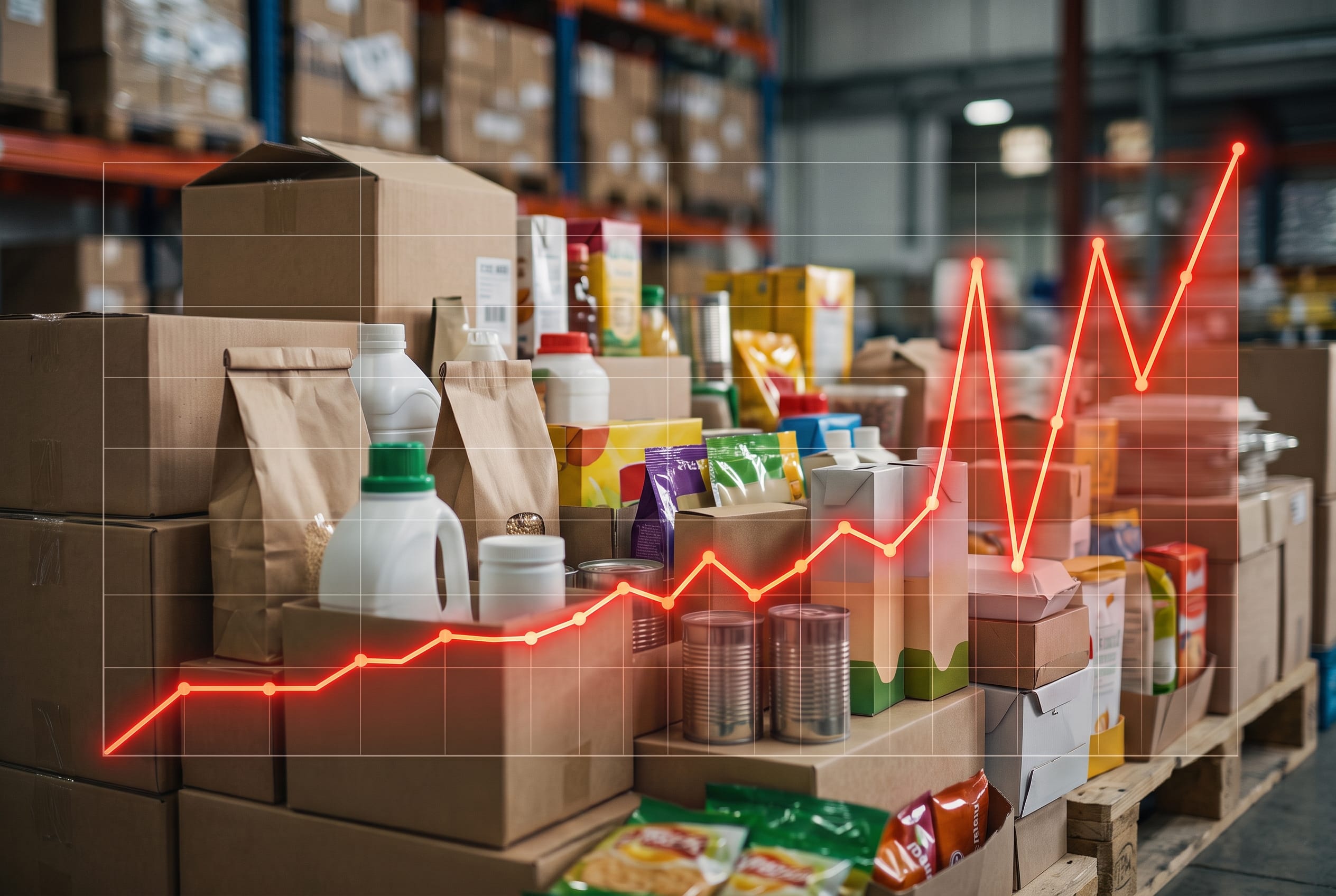
Global unrest and severe supply chain issues have triggered an unprecedented surge in food packaging costs across Europe, sparking fears of a renewed spike in supermarket grocery inflation. Figures from the Flexible Packaging Europe (FPE) Raw Material Price Index show that the second quarter of 2026 brought rapid price rises across every major packaging material. The crisis, largely driven by shipping disruptions around the Strait of Hormuz, has heavily hit an industry reliant on plastics, foils and paper to keep everyday food products fresh. The supply chain shock This sudden market shift resulted from a clash of low European material stocks and disrupted Middle Eastern production. As global threats emerged, buyers abandoned cost negotiations in a panic to secure vital supplies. This rush buying caused raw manufacturing materials to skyrocket within weeks: BOPP plastic film surged by 97% owing to severe European resin shortages. PET plastic film rose by 40%, driven by rising global oil prices. HDPE and LDPE packaging jumped 38% and 31% respectively, as buyers prioritised supply over cost. Even materials less reliant on oil, such as aluminium foil, felt the squeeze due to soaring warehouse storage premiums and sustained high energy costs, with prices increasing by 12%. Impact on supermarket aisles While European suppliers have managed to maintain delivery volumes without major factory closures, the severe financial impact is now rippling down the supply chain. Food and drink manufacturers cannot absorb these double-digit increases indefinitely. Consequently, industry bodies like the Food and Drink Federation (FDF) have revised their late-2026 UK food inflation forecasts to 9% or higher. The primary concern for brands is “shelf shock”, the risk that impending retail price hikes will severely hurt consumer spending. For food producers aiming to navigate this market volatility, securing reliable, cost-effective packaging has become more critical than ever to protect their tightening profit margins. Is the peak behind us? There are early signs that the worst of these sudden price spikes may have plateaued. Late June data indicates that as buyers shift their focus back to affordability, more competitive offers from international markets are helping spot prices ease. If supply chain bottlenecks continue to clear alongside the gradual reopening of the Strait of Hormuz, packaging prices should normalise towards the end of 2026. However, because baseline costs remain well above pre-crisis levels, the food industry must prepare for elevated overheads to persist well into the autumn.
Global secondary packaging market set to hit £224 billion by 2030

Research from Smithers forecasts that the global market for secondary and protective packaging will hit £224 billion by 2030. The secondary packaging market is undergoing a significant transformation, driven by the ascendancy of e-commerce. A recent report from Smithers – a multinational testing, consulting and information services provider – indicates that e-commerce has surpassed consumer durables, non-durables, and industrial allocations to become the world’s fastest-growing segment in this market. While a steady increase in overall secondary packaging volumes is anticipated throughout the remainder of the decade, the composition of materials, formats, and consumption locations is fundamentally shifting. Packaging demand is now being heavily influenced by warehouses, fulfilment centres, and parcel networks, eclipsing the impact of traditional retail channels. Furthermore, the global packaging industry is increasingly prioritising environmental sustainability. Josh Brooks, divisional director of packaging at Easyfairs, said: “The global packaging industry is placing increasing emphasis on improving the environmental sustainability of its products as consumer expectations and regulatory requirements continue to intensify. “Companies are working to reduce material use, adopt recyclable or renewable resources, and lessen overall environmental impact.” The European market is poised for a significant increase in e-commerce secondary packaging volumes, which Smithers projects will rise by 45% by 2030. This growth sharply contrasts with the more modest 10.5% growth anticipated for the overall secondary packaging market. Specifically, e-commerce packaging is expected to grow from 4.7 million tonnes in 2023 to 6.8 million tonnes by 2030. Over the same period, total secondary packaging volumes are forecast to increase from 30.6 million tonnes to 33.8 million tonnes. Brooks added: “In Europe, EU member states are preparing to implement the PPWR over the next five years, aiming to meet the 2030 target for fully recyclable packaging. “This regulatory push underscores the growing urgency for innovation that aligns environmental responsibility with reliable packaging performance.” Paper-based protective packaging is projected to be one of the fastest-growing material types for packaging. The report forecasts a Compound Annual Growth Rate (CAGR) of 3.9% for paper fill through to 2030, driven by the adoption of automated paper dispensing systems in large e-commerce fulfillment centers. In the UK, the shift to paper is influenced by environmental, operational, and regulatory factors. Many longstanding packaging manufacturers, such as Polybags.co.uk have diversified their product range in recent years to include an ever-expanding selection of paper and cardboard packaging. Key drivers include the Plastic Packaging Tax, reduced Extended Producer Responsibility (EPR) obligations, and the material’s strong acceptance in kerbside recycling schemes, as highlighted by Smithers. Smithers also noted an emerging opportunity in returnable and reusable secondary packaging, particularly within closed-loop or business-to-business supply chains. However, this shift faces near-term obstacles, such as higher initial costs, low return rates, demanding durability requirements, and the logistical complexity of reverse logistics, cleaning, and redistribution.